Saturday, December 11, 2010

Movie on Monday and Wednesday!


We're in for a treat!  We're going to see the movie on Monday and Wednesday!  Refer to the sheet of the week for more details...

Monday, December 6, 2010

A few practice DST questions:

1. Show how the climaxes in two works of literature that you have studied are related to the central action and give meaning to the whole work.

2.We can, at times, forgive the damage caused by the weak and the stupid; but when the damage is caused by the strong and intelligent, the action producing the damage shocks us.  Develop this idea by discussing the damage produced by characters in two of the works you have studied.

3.”It is not true that suffering ennobles the character; happiness does that sometimes, but suffering, for the most part, makes men petty and vindictive.”  Do you agree with these words by W. Somerset Maugham?  Discuss, using two works of literature you have read.

Friday, December 3, 2010

DST on Wednesday!

I will give you more information on Monday, and on the Sheet of the Week, so stay tuned...
(By the way, this is Vivien Leigh as Scarlett O'Hara.  Wow.)

Sunday, November 28, 2010

What are your impressions so far?

Now that you've read the first scene, give me your first impressions of the setting, mood, and principal characters. What sort of exposition does Scene 1 provide?

Friday, November 12, 2010

Ambitious women

How do women who desire power, but live in worlds that deprive women of it systematically, express their ambition?  How can they find ways to realize that desire?  Think about the books we've read so far, in première and terminale, and comment on the ways female characters assert and advance themselves. What price do they pay?

Sunday, November 7, 2010

What is the role of the chorus?

What kinds of interactions do you see taking place between the chorus and the principal characters throughout the play?  What is the relationship between the chorus and the audience?

Saturday, October 30, 2010

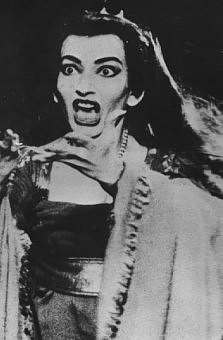
Not a woman you want to cross...

Why does Euripides seem to want us to feel pity for Medea at the start of the play?  When does that pity begin to fluctuate, and perhaps change to fear and horror?  What kind of tragic hero(ine) is Medea?  (Hint:  look at the Medea page and follow the link to Aristotle's definition of tragic hero...)