Monday, May 2, 2011

Moving ahead with Dickinson...


We will be moving through our Dickinson packet quickly over the next week.  Take a look at the Sheet of the Week for more details...

Sunday, April 10, 2011

Welcome back, all!

We're moving on with more Hamlet and more Dickinson tomorrow!  Check out the sheet of the week page for more details...

Saturday, March 19, 2011

Lots of important information...

on the sheet of the week, so check it out.  Mock orals, continuation of Hamlet, and other things to look forward to next week. 

Question:  What forms of surveillance do you see as you begin to read Act III?  Is Hamlet aware of being watched?

Thursday, March 10, 2011

Two more scenes...

for Monday.  Read Act 3, Scenes 1 and 2.  Remember to annotate!

Saturday, March 5, 2011

Onward with Hamlet!


Hamlet has promised to avenge his father's murder swiftly.  Why doesn't he take action right away?

We're moving on, starting Act II on Monday.  See the Sheet of the Week for details!

Also, make sure you check out the email I sent you recently regarding mock orals. I will explain further on Monday...

Tuesday, February 22, 2011

Moving on...

But first, I'll be collecting your responses to the thinking questions tomorrow.  Also, remember that you should each have chosen a passage for your commentary.  We'll be wrapping up H of D, then taking a look at the Achebe essay on Thursday.  And then, on to Hamlet!

Sunday, February 6, 2011

Achebe article

You can read it here:

http://kirbyk.net/hod/image.of.africa.html

We'll be discussing it after the break.

Commentary mock orals practice assignment

Okay, folks, here's an assignment that's coming up.  It's not due until a full week after we get back from break, but I want you to choose your passages within the next few days.  Here's what you need to do:  go to the H of D page, read through the passage options, and choose one that you find interesting.  Then, comment on this post with your name and the number of your selected passage to "reserve" it.  We'll discuss this further on Monday...

Saturday, January 29, 2011

Here he is again, in another role...

After reading part 1 of Heart of Darkness, what are your impressions?  What kind of a traveler and storyteller is Marlow?  What are his motivations?  To what extent is he a mouthpiece for Conrad?  Where is this novella taking us?

Sunday, January 23, 2011

Romans, sea knights, and Victorian-era sailors...

What do they have in common?  What motivates Marlow?  How is he similar and different to those explorers and imperialists he mentions in the first few pages of the novella?

Wednesday, January 12, 2011

Context!


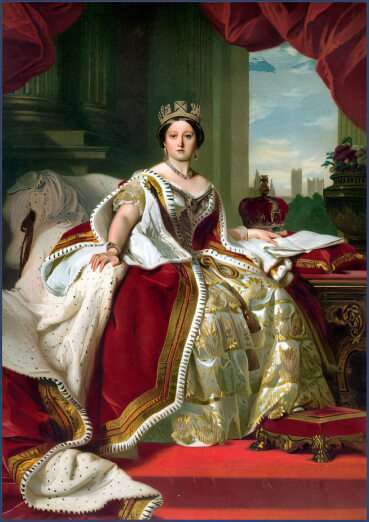
Here is a portrait of Queen Victoria, who takes the throne of England in 1837 and rules until 1901. 

And here is a note that Ms. Reilly wrote to her Terminales, which I think we can all benefit from:

Dear OIB class,

You say the questions on the quiz seem like random, trivial matters, but I disagree. I'm beginning Fences with my Premieres today. I open the work to the first page, where context is described. I remember now, the comment made by August Wilson regarding life in Pittsburgh...the European immigrants found they could achieve their dreams through the promise offered by industry there: "The city grew. It nourished itself and offered each man a partnership limited only by his talent, his guile, and his willingness and capacity for hard work. For the immigrants of Europe, a dream dared and won true.  The descendants of African slaves were offered no such welcome or participation."

It is incredible how texts come to life again when we reread them and how stale and uninteresting they become in a fuzzy recall haze. You see, Troy's father was a sharecropper and Troy was a sanitation worker. These may seem like small, random facts for the student who works far away from the text and only close to the basic plot, but to know that Troy's father had lived the life destined to the descendants of slaves, a form of labor still tied to the land and often comparable to serfdom, illuminates our understanding of Troy as tragic hero. Troy, a sanitation worker, is a step beyond, but still in a position of segregation--African-Americans did not ride up front, but hauled the garbage in the back. This informs Troy's frustrations and helps explain his conflicts with the other characters in the play. It will build his tragedy as well, as these frustrations cause him to leave first base, go over the fence and destroy his marriage.

In fact, August Wilson is writing the history of postbellum America, the heritage lived out by African Americans. Fences, one of ten plays that chronicle this story throughout the 20th century, takes place in the 1950's, at a time just before the Civil Rights' shift of the 60's. Troy feels the defeat of being the child of a sharecropper, being a sanitation worker, and of not having crossed the color barrier into baseball like Jackie Robinson. His son, Cory, can have a football scholarship, can go to college, can have a different future. But Troy can't get that. He fences him in....and now the real discussion of this tragedy, with the use of the main metaphor, with the use of character analysis, with the use of this particularly important contextual point, kicks in.

That, class, is why context, seemingly unimportant you may think, is really very important.
Open your books. See what the authors say. Many, like Wilson and Morrison, lay it out for you, right up front there... You'd be surprised what the text will tell you. In other cases, look through your notes, or even the blog. We usually start with context in class discussion. Not a lot, but what is laid out is significantly important. Primogeniture, gentry, Great Chain of Being, entailment, existentialism....etc.

Check it out. Then cross check it with the author's own words...Rediscover the texts. They are way more interesting than the mash up in the notes. I promise. Think of the pleasure you had in reading the words on the quiz. You rediscovered those words, and it was enjoyable. I saw. You don't have to acknowledge it out loud, but it is so.

Tuesday, January 4, 2011

Back to school, and back to work!


Welcome back from break, Terminales!  Coming up next:  Heart of Darkness.  We'll finish with Streetcar this week, and then we'll be delving more deeply into even darker themes...

In the meantime, here's a question for you to think about and blog upon:  thinking about the definitions of madness we looked at a few weeks ago, trace Blanche's progression throughout the play.  What definitions apply to her character, and when?  Be precise...

Saturday, December 11, 2010

Movie on Monday and Wednesday!


We're in for a treat!  We're going to see the movie on Monday and Wednesday!  Refer to the sheet of the week for more details...

Monday, December 6, 2010

A few practice DST questions:

1. Show how the climaxes in two works of literature that you have studied are related to the central action and give meaning to the whole work.

2.We can, at times, forgive the damage caused by the weak and the stupid; but when the damage is caused by the strong and intelligent, the action producing the damage shocks us.  Develop this idea by discussing the damage produced by characters in two of the works you have studied.

3.”It is not true that suffering ennobles the character; happiness does that sometimes, but suffering, for the most part, makes men petty and vindictive.”  Do you agree with these words by W. Somerset Maugham?  Discuss, using two works of literature you have read.

Friday, December 3, 2010

DST on Wednesday!

I will give you more information on Monday, and on the Sheet of the Week, so stay tuned...
(By the way, this is Vivien Leigh as Scarlett O'Hara.  Wow.)

Sunday, November 28, 2010

What are your impressions so far?

Now that you've read the first scene, give me your first impressions of the setting, mood, and principal characters. What sort of exposition does Scene 1 provide?

Friday, November 12, 2010

Ambitious women

How do women who desire power, but live in worlds that deprive women of it systematically, express their ambition?  How can they find ways to realize that desire?  Think about the books we've read so far, in première and terminale, and comment on the ways female characters assert and advance themselves. What price do they pay?

Sunday, November 7, 2010

What is the role of the chorus?

What kinds of interactions do you see taking place between the chorus and the principal characters throughout the play?  What is the relationship between the chorus and the audience?

Saturday, October 30, 2010

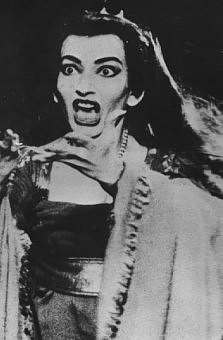
Not a woman you want to cross...

Why does Euripides seem to want us to feel pity for Medea at the start of the play?  When does that pity begin to fluctuate, and perhaps change to fear and horror?  What kind of tragic hero(ine) is Medea?  (Hint:  look at the Medea page and follow the link to Aristotle's definition of tragic hero...)

Sunday, October 17, 2010

A Room of One's Own


First of all, check out Robin's thorough and thought-provoking notes from last week in the Recaps  page.  Thanks, Robin!  Looking ahead:  over your break, which I hope is wonderful, you will be reading a portion of Medea as well as Chapters 1 and 2 of A Room of One's Own.  We'll be thinking about unconventional, powerful and (ultimately) tragic women over the next few weeks.  How do women assert themselves when they live within a system that dispossesses them and deprives them of a tradition?  How do you make yourself heard and respected if you have been denied access to the institutions that convey power?  The character of Medea and the persona of Woolf are very different, of course, but they both raise pressing questions about female power.  To be continued, with your help...